
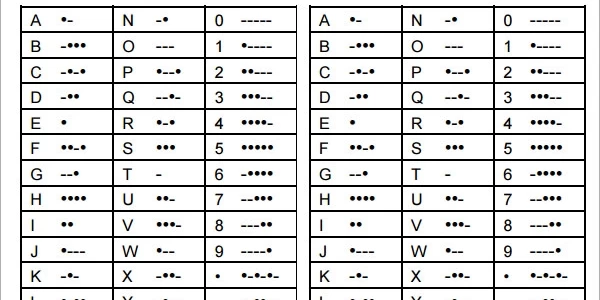
In the world of communication, Morse code was the first standardized system for sending messages over long distances. It was developed in the 1830s by Samuel Morse and Alfred Vail as a way to transmit messages over the newly developed telegraph lines. Morse code has since been used extensively in radio communication and remains an important means of communication even today. However, the cumbersome nature of decoding the dots and dashes of Morse code has led to the development of Morse code translators, translator for morse code is a tool that converts Morse code messages into readable text.
Was this response better or worse?BetterWorseSame In this article, we will delve into the evolution of Morse code translators and how they have revolutionized communication.
Introduction to Morse Code
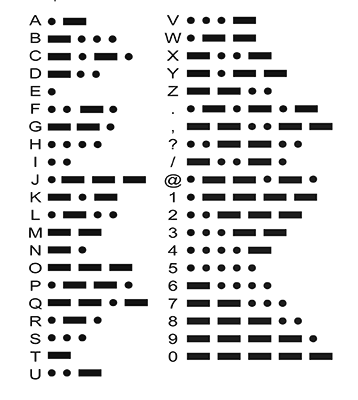
Morse code is a system of dots and dashes that represent the letters of the alphabet, numbers, and other characters. It was invented in the early 1830s by Samuel Morse and Alfred Vail as a way to send messages over the telegraph lines. The system was designed to be simple, with each letter represented by a series of dots and dashes that could be easily transmitted over the telegraph wires.
The telegraph system quickly became the primary means of long-distance communication, and Morse code became the standard method of transmitting messages. The code was used extensively during the Civil War and was instrumental in the development of modern communication systems.
The Need for Morse Code Translators
Despite its widespread use, Morse code has several limitations. The system is difficult to learn, and decoding messages requires a high level of skill and concentration. This makes it unsuitable for use in many situations, particularly those where fast and accurate communication is essential.
The development of Morse code translators was therefore a significant breakthrough. These devices could decode Morse code messages automatically and convert them into text, making communication faster and more efficient.
Early Morse Code Translators
The first Morse code translator was developed in the early 1900s by H.E. Shreeve, an American inventor. Shreeve’s device used a series of relays to automatically decode Morse code messages and print them on paper tape. The tape could then be read by an operator, eliminating the need for manual decoding.
Over the years, various other Morse code translators were developed. One of the most significant was the “Morse Translator,” developed by C.E. Scranton in 1917. This device used a keyboard and a series of relays to automatically translate Morse code messages into English text.
Advancements in Morse Code Translation Technology
With the advent of modern technology, Morse code translation has become even more efficient. Today, there are several different types of Morse code translators available, ranging from simple apps that can be downloaded onto a smartphone to advanced software that is used in the military and other high-security environments.
One of the most significant advancements in Morse code translation technology has been the development of automatic Morse code recognition software. This software can decode Morse code messages in real-time, making it ideal for use in high-speed communication systems.
Another significant development has been the integration of Morse code into speech recognition technology. This allows Morse code to be used as an alternative means of communication for individuals with speech or hearing impairments.
Conclusion
From its humble beginnings as a series of dots and dashes transmitted over telegraph wires, Morse code has come a long way. The development of Morse code translators has revolutionized communication, making it faster, more efficient, and more accessible than ever before. Today, Morse code remains an important means of communication, and with the continued advancements in technology, its usefulness is likely to endure for many years to come.